
Anúncios
Introduction
Learning how to play the keyboard is one of the most accessible ways to enter the world of music. The keyboard is versatile, affordable, and beginner-friendly, making it an excellent choice for people of all ages. Moreover, it allows learners to understand musical structure while producing pleasant sounds from the very beginning.
Although some people believe musical ability requires natural talent, that idea is misleading. In reality, keyboard skills develop through practice, patience, and correct guidance. Therefore, this guide explains how to learn basic keyboard playing step by step, using simple language, smooth transitions, and practical advice designed for complete beginners.
Anúncios
Understanding What a Keyboard Is
Before playing, understanding the instrument helps.
Difference Between Keyboard and Piano
A keyboard is:
- Electronic
- Portable
- Adjustable in sound and volume
In contrast, a piano is acoustic and larger.
Anúncios
Why the Keyboard Is Ideal for Beginners
Keyboards offer:
- Built-in learning features
- Lower cost
- Headphone practice options
Starting With the Right Learning Mindset
Mindset shapes progress.
You Do Not Need Musical Talent
Skill grows with repetition.
Progress Comes Gradually
Improvement happens step by step.
Choosing the Right Keyboard for Beginners
The right instrument matters.
Recommended Key Count
Beginners should choose:
- 61 keys for basic learning
- 76 keys for more flexibility
Important Beginner Features
Helpful features include:
- Touch sensitivity
- Metronome
- Lesson mode
Understanding the Keyboard Layout
Familiarity builds confidence.
White Keys and Black Keys
White keys represent natural notes.
Black keys represent sharps and flats.
Finding Middle C
Middle C is the reference point.
Learning the Names of Notes
Note recognition is essential.
White Key Notes
They repeat in this order:
- C, D, E, F, G, A, B
Using Patterns to Identify Notes
Groups of black keys guide note location.
Proper Sitting and Posture
Comfort improves control.
Correct Sitting Position
Sit centered and relaxed.
Arm and Shoulder Relaxation
Relaxation prevents tension.
Hand Positioning Basics
Good habits start early.
Finger Numbering System
Fingers are numbered 1 to 5.
Curved Fingers Technique
Curved fingers improve accuracy.
Understanding Basic Music Concepts
Music theory supports playing.
What Is an Octave?
An octave is a repeating note range.
Understanding Pitch
Higher keys sound higher.
Learning to Read Simple Sheet Music
Reading expands ability.
Treble Clef for Beginners
Most beginners start with treble clef.
Matching Notes to Keys
Practice connecting symbols to keys.
Learning Rhythm and Timing
Timing creates music.
Understanding Beats
Music is divided into beats.
Using a Metronome
Metronomes improve consistency.
Practicing Simple Finger Exercises
Exercises build coordination.
Five-Finger Exercises
These strengthen finger independence.
Slow Practice Benefits
Slow practice reduces mistakes.
Learning Simple Melodies
Melodies motivate learning.
One-Hand Songs
Start with one hand.
Repeating Short Songs
Repetition improves memory.
Introducing the Left Hand
Balance matters.
Basic Left-Hand Notes
Start with single notes.
Avoiding Hand Confusion
Practice hands separately first.
Playing With Both Hands
Coordination develops gradually.
Starting With Simple Patterns
Simple patterns reduce overwhelm.
Maintaining Steady Rhythm
Focus on timing over speed.
Understanding Basic Chords
Chords add richness.
What Is a Chord?
A chord is multiple notes played together.
Major Chords for Beginners
Major chords sound happy.
Learning Common Beginner Chords
Start simple.
C Major Chord
C-E-G is foundational.
G Major and F Major
These expand options.
Practicing Chord Transitions
Smooth transitions matter.
Moving Slowly Between Chords
Slow movement builds accuracy.
Keeping Fingers Close to Keys
This improves efficiency.
Using Built-In Keyboard Functions
Technology supports learning.
Demo Songs
Demo songs inspire practice.
Lesson Modes
Lesson modes guide beginners.
Developing a Practice Routine
Routine builds progress.
Short Daily Sessions
Consistency matters more than length.
Setting Clear Practice Goals
Goals improve focus.
Avoiding Common Beginner Mistakes
Mistakes are learning tools.
Playing Too Fast
Speed reduces accuracy.
Ignoring Finger Placement
Proper fingers matter.
Learning Through Repetition
Repetition strengthens memory.
Repeating Exercises Daily
Daily repetition builds skill.
Revisiting Old Lessons
Review improves mastery.
Using Visual Learning Tools
Visual aids help understanding.
Watching Beginner Tutorials
Short tutorials clarify techniques.
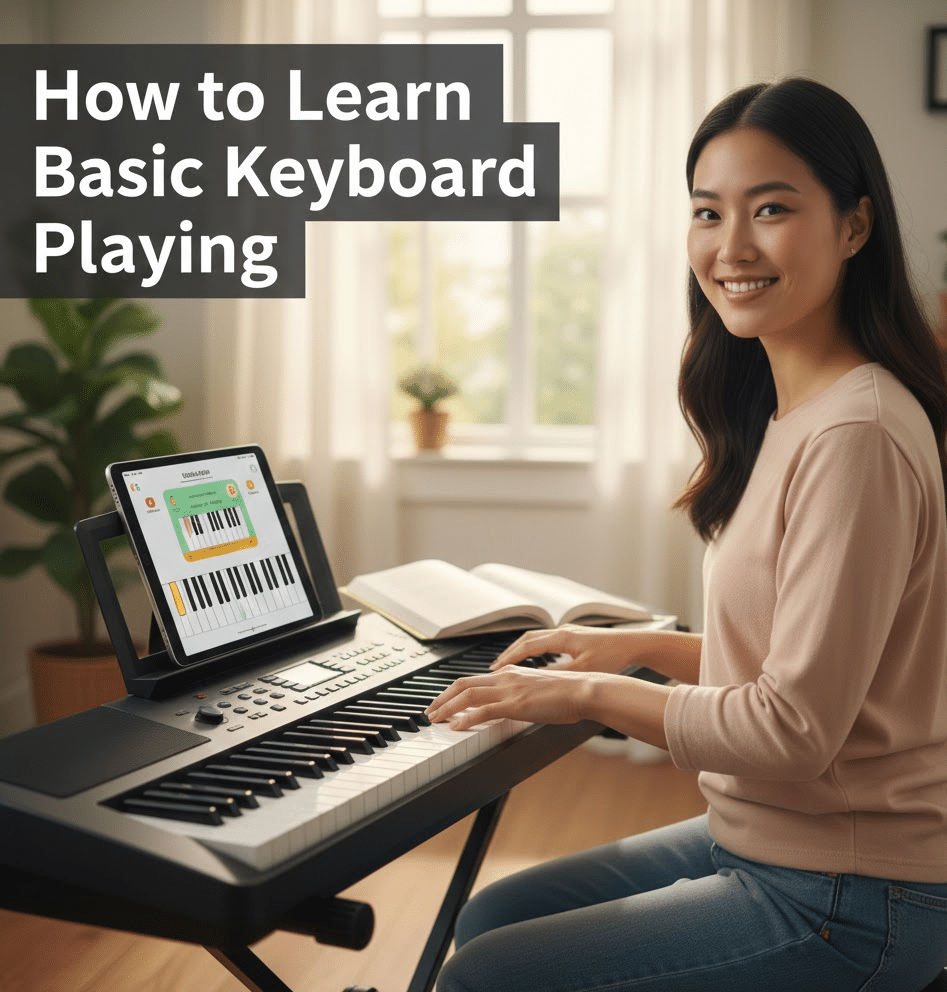
Following On-Screen Keyboards
Visual keyboards reinforce learning.
Improving Hand Coordination
Coordination takes time.
Practicing Hands Separately
Separation improves control.
Gradually Combining Hands
Gradual combination reduces frustration.
Learning Simple Songs With Chords
Songs motivate learners.
Choosing Beginner Songs
Choose slow, simple melodies.
Playing Songs You Enjoy
Enjoyment increases motivation.
Understanding Dynamics and Expression
Expression adds emotion.
Playing Soft and Loud
Dynamics create interest.
Using Touch Sensitivity
Touch sensitivity improves control.
Training Your Ear
Ear training supports accuracy.
Listening Carefully to Notes
Listening improves pitch awareness.
Matching Sounds by Ear
Matching builds musical intuition.
Building Finger Strength
Strength improves endurance.
Regular Finger Exercises
Exercises reduce fatigue.
Avoiding Tension
Relaxation prevents strain.
Staying Patient During Learning
Patience leads to success.
Accepting Slow Progress
Progress is not linear.
Celebrating Small Wins
Small wins build confidence.
Organizing Learning Materials
Organization saves time.
Keeping Sheet Music Accessible
Easy access improves consistency.
Tracking Practice Progress
Tracking motivates learning.
Learning Music Terminology Gradually
Terminology supports growth.
Understanding Basic Terms
Terms like tempo and scale matter.
Applying Terms Practically
Practice reinforces understanding.
Using Keyboard Learning Apps
Apps provide structure.
Beginner-Friendly Apps
Apps offer guided lessons.
Combining Apps With Practice
Balance improves results.
Practicing Without Pressure
Pressure reduces enjoyment.
Playing for Fun
Fun sustains interest.
Allowing Mistakes
Mistakes are part of learning.
Learning at Any Age
Age is not a barrier.
Adult Beginners Can Learn
Adults often learn efficiently.
Children Benefit From Playful Practice
Play encourages engagement.
Applying Keyboard Skills Creatively
Creativity enhances motivation.
Creating Simple Melodies
Creation builds confidence.
Experimenting With Sounds
Sound variety inspires curiosity.
Cited Learning Principles
- “Consistency builds skill.”
- “Slow practice leads to accuracy.”
- “Enjoyment sustains learning.”
- “Simple foundations lead to mastery.”
These principles guide effective learning.
Long-Term Benefits of Learning Keyboard
Keyboard learning offers:
- Improved coordination
- Stress reduction
- Cognitive stimulation
- Creative expression
- Musical literacy
Maintaining Motivation Over Time
Motivation requires care.
Setting Achievable Milestones
Milestones encourage progress.
Revisiting Favorite Songs
Favorites renew excitement.
Creating a Personalized Learning Plan
Personal plans work best.
Adjusting Pace as Needed
Flexibility reduces burnout.
Mixing Exercises and Songs
Variety keeps practice engaging.
Conclusion
Learning how to play basic keyboard is an achievable and rewarding goal. With the right mindset, consistent practice, and clear foundational skills, beginners can develop confidence and musical ability over time.
By focusing on proper posture, finger placement, rhythm, and simple songs, keyboard learning becomes enjoyable rather than overwhelming. Ultimately, the keyboard is not just an instrument—it is a gateway to creativity, discipline, and lifelong musical enjoyment.
